1984
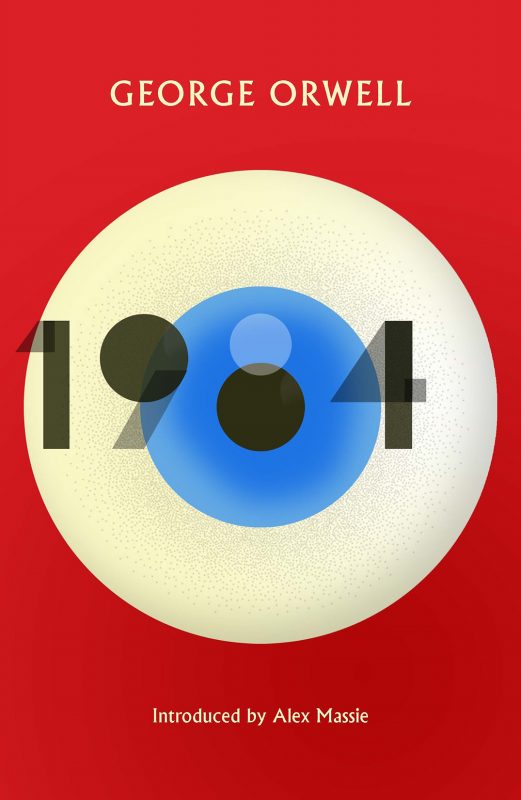
After taking an interest in Christopher Hitchens’ work and reading “Letter’s to a young contrarian” it would be hard not to come across Hitchens’ love for George Orwell. So I thought there was no better place than to begin my book review journey than with George Orwell’s most notable book 1984. When thinking of my impressions of the book before reading it, I am reminded of an episode of Q.I. I watched this episode with my granddad as a young teenager. In the episode Stephen Fry asks the Audience how many of them had read 1984, he then reveals to the audience that most people tend to lie about reading 1984. He then asks again whether people had read it. Unsurprisingly a lot of people put their hands down. To me before reading the book this was the core memory I had associate with George Orwell’s 1984. After reading the book myself I now see the truth in this as 1984 seems to have it’s message flattened by present people who seem to invoke it, potentially never having read the book themselves. In this short review I would like to talk about the ideas that I found the most interesting from the book that as I’m aware (In my limited knowledge) are not as commonly spoken about.
The idea of hatred displayed in Orwell’s novel is importantly not as a act of coercion but of genuine belief. This is presented quite explicitly when we meet with a charismatic orator who projects the war with Eurasia, the crowd is whipped up in a frenzy of hatred. This hatred and belief that these people are bad allow the crowd to cheer at atrocities such as “deportations, lootings and rapings”, even though they know simultaneously that these things are awful (Doublethink). Orwell suggests that if these people were to meet then it would dissipate this hatred as they are people like them, an appeal to understanding. The lack of a personal knowledge of these people and the validation of the group creates an environment of brutal and irrational cruelty. I see Orwell’s appeal to 2 themes that are present throughout the book. We should be wary of feeling righteous in our beliefs because others believe it too, “Sanity is not statistical” after all. Look at the facts and make sure 2 + 2 does not = 5, our beliefs are powerful so make sure they are yours and not someone else’s. A caution against hatred, it can justify awful actions that you know are wrong, to heed Bertrand Russell’s message to future generations “Love is wise, hatred is foolish.”
Both Winston and Julia are largely unlikable however it feels as if Julia is largely not done justice and can read as quite dated. Both Winston and Julia are naive, though Winston is largely not portrayed this way, Winston dreams of revolution and Julia dreams of a well-being. Julia’s character is explicitly built around being “a rebel from the waist downwards”, she is degraded by Winston for only rebelling in this way. Her world view is largely portrayed through sexual freedom after she is released from the ministry of love she is describe as stiff and angry like Winston’s wife. However though this is largely told form a close third person perspective of Winston who overly has a negative view on women. For instance, he fantasises about raping Julia before they speak for the first time and feels frustrated by his previous wife. Even giving Orwell the benefit of the doubt, this is not as explicit as his political criticism and therefore a shallow reading of 1984 could potentially see Julia as a largely 1D sex object. Julia however is largely what pushes Winston into rebelling and her form of rebelling though degraded by Winston can be seen as a more grounded and personal act of rebellion.
After finishing the book, I believe this is a good place to start my journey into writing book reviews. Though I have written a positive and negative about this book, my experience with 1984 was generally very good. I have found myself drawing on it far more than books I have read previously in conversations. The topics I choose to talk about I find them to the concepts of NewSpeak or the surveillance state . Understanding a book that is referenced so often really gives you insight into why the terms from the book are so commonly used. It really highlights to me the importance of reading the source material, I hope to return to this book one day with a new insight and understand it deep than I do now. I used to not read books more than once but there are books you should come back to and I suspect 1984 will be one of them for me. After this I’m looking to reading Bertrand Russell’s work more in depth as well as potentially Brave New World and Catch 22. See you in the next review my bookish adventurer and good luck on your travels through the literary world.